This blog is intended for posting of news and information about science as related to the fact of biological evolution. ▼ Site Map ▼
Biological evolution is a fact that is demonstrated by an abundance of evidence too voluminous to list. Theories concerning mechanisms of biological evolution, which have moved beyond the Darwinism that creationists attack in strawman arguments, are empirically supported explanations for the operation of biological evolution.
"God did it by performing miracles" is no explanation at all, though it seems adequate for those with an inculcated, emotional insistence that they are God's special creations. Such people, in failing to employ critical thinking, cannot reasonably claim to be the product of 'intelligent design' because they demonstrate an emotion-distorted failure of understanding.
▼ Mechanisms Index ▼
▼ Refuting "intelligent design" fictions ▼
▼ Refuting creationism ▼
▼ Glossary of Terms ▼
▼ Evolution▼
▲ top ▲
Site

Mechanisms of Biological Evolution
However, morphologic changes may reflect alterations in the regulation of genetic expression without a major alteration in genotype – witness the considerable differences that selective breeding has wrought in size and configuration within one canine species. Similarly, the paramount importance of gene regulation probably explains much of the morphological difference between humans and chimps – two species who share 98% of their DNA. Recently, researchers have demonstrated that gene regulation has enabled rapid phenotypic speciation in sticklebacks. Along the same lines of modification of genetic expression, alternative splicing enables a single gene to give rise to multiple versions of a protein.
mutation → allele → pre-mRNA → constitutive pre-mRNA splicing and/or epigenetic alternative splicing → proteins → intergenerational fate of allele
There are two basic types of mechanism involved in biological evolution. First are the genetic sources of alteration of a gene within the genotype of an individual. Second are those statistical mechanisms that determine the fate of an altered allele. These are the mechanisms that increase or decrease frequency of an allele (a form of a gene at a locus) within a population.
?► Mechanisms and Evolution : Darwinism :
The Myth of Dawkins as a Cult Figure.
This post is not fully concerned with a direct refutation of creationism. Instead I wish to comment on the types of anti-science implications made by religionists.
In a wordpress post titled The Cult of Dawkins, "Beastrabban" implies that (all? many? some?) atheists become atheists not through critical thinking but through hero-worship of Richard Dawkins as a cult figure.
The post consists mainly of quotes: from Thomas Carlyle and from a book entitled The Jung Cult: Origins of Charismatic Movement. The post is moderately interesting despite comprising an uncritical misappropriation of comments about un-scientific Jung onto biologist Dawkins.[Max] Weber defined a charismatic group - a cult - as consisting of anywhere from a dozen or so to hundreds of thousands of followers, who have a shared belief system, a high level of social cohesiveness, are strongly influenced by the groups behavioural norms and impute charismatic or divine power to the group or its leadership.
(Sounds like Judaism, Christianity, Islam, Sikhism etc.)Charismatic cults tend to ossify into more bureaucratic structures as they grow and there develops a greater need to regulate their functioning, such as laying down basic standards of belief, and norms of practice and organisational structure. Weber called this process the ‘routinization of religion’.
(As I said, religion.)Now Dawkins clearly is not a hermit, but his vocation as a biologist has given him the status of someone with a special connection and insight into nature and the cosmos.
Correct. An expert in the field of evolutionary biology.
Thus Dawkins also seems to partake of the role of a prophet, just as Sagan did when he was articulating his own unique pantheism in Cosmos back in the 1980s.Here, B further loses credibility with this emotional tu quoque, ad hominem attack on expert knowledge.
Again, Dawkins and the contemporary cult surrounding him fits this pattern perfectly. He has money coming in from TV and radio appearances, lectures, books and newspaper articles, and even his own Richard Dawkins Foundation for Science and Reason to disseminate and routinise his ideas, and which clearly have provided him with a good living while recruiting yet more followers to his cause. So, rather than being a liberator, Dawkins has instead stopped people from thinking for themselves, if that was ever his gaol. Rather than teaching people to think critically for themselves, he is now acting as any other religious figure with a material interest in maintaining his hold over people’s minds and wallets. If there are atheists seriously concerned to think for themselves, I suggest they might make a good start by taking a very serious, sceptical look at Dawkins, and stop believing what he says.B said, "Now there clearly is a distinct ‘Dawkins’ cult out there. He has a website and a forum, inhabited by his fans." What then B does make of the Pope, or of Dembski, or of Ken Ham and his misnamed "Answers in Genesis" website? My guess would be that B sees religionists as true prophets and their donation-soliciting websites as a service to the faithful.
B implies that atheism is a response to Dawkins' personality without reference to content, whereas the reality is more likely that the rational position comes first and accepting the personality comes second. In the prevailing atmosphere face of religious conviction, atheism RESULTS from critical thinking.
Practicing and understanding science is all about the application of critical thinking to empirical evidence, whereas religious belief actually precludes critical thinking. Dawkins writes popular science, creationists and intelligent design proponents publish pseudoscience and unfounded attacks on a strawman-misrepresentation of science. I am not a fan of popular science writing because I find science-for-the-layman to be tediously slow, under-stimulating reading. However, this is not to detract from the veracity of Dawkins' science.
As to Jung, he merely demonstrates that pseudo-philosophical mumbo jumbo with interesting content and a veneer of authority appeals to those who do not yet understand the subject matter (human psychology). In the absence of understanding, people gravitate toward the flashiest, most interesting pseudo-explanation. Woops, I just described the appeal of religions.
. . . discussion continued . . .
The Myth of Dawkins as a Cult Figure II
. . . discussion continued from here . . .Hi. Thanks for your comments. Allow me to reply to them. Firstly, the papacy and Answers in Genesis clearly are religious organisations. They don’t pretend to be otherwise. The Discovery Institute is a little different, as although very many of its members clearly are religious, David Berlinski is an agnostic, and the scientific arguments for ID were also articulated way back in the 1980s by Chandra Wickramasigne and Fred Hoyle, who were militantly atheist. See their comments about Christianity enchaining minds
in Evolution from Space.
I do wonder about B's definition of religion, which I would define as concerning itself with the supernatural. Dawkins, as a scientist, is not pondering the supernatural (other than to deny it), so I wonder at B's implication that Dawkins is founding a religion while pretending to do otherwise. It’s clearly an interesting little tu quoque twist to accuse a scientist of perpetrating religion.
If I only had a dollar for every time I’ve seen a creationist troup out Chandra Wickramasigne and Fred Hoyle! It is immaterial to the value of Paley’s Blind Watchmaker argument whether or not a couple of atheists advocated the idea at some point. Since creationists love to play at fallacious argumentum ad verecundiam, it is relevant to point out what the true experts think. The ID notion is rejected by thousands of unbiased scientists. The real point is not the religious affiliations of those who have espoused an idea, it is the content of the idea itself. As a piece of philosophy, intelligent design “theory” is as fatally flawed as Descartes’ circular ontological argument for God. ID is essentially a trumped up argument from analogy with overgeneralization thrown into the mix.
Whether atheism results from critical thinking is a moot point. For some people it certainly does, for others critical thinking leads away from atheism. As Francis Bacon says, a little philosophy leads one away from God, a lot to God. And the ancient Greek pioneers of critical thinking, Plato and Aristotle, were theists.I wonder too about B's conception of critical thinking. Since none of the empirical evidence does, or even could, point incontrovertibly to a supernatural agent, genuine critical thinking would lead away from supernatural “God of the Gaps” explanations. One could, of course hedge one's bets on the “unknowable” aspect and adopt agnosticism.
I find philosophy quite interesting in so far as it teaches critical thinking, but much philosophy is merely the playing around with fanciful ideas, so does not rank as critical thinking and far less relates to the physical world. Of course Plato and Aristotle were theists, they had no good explanation for the natural world 2300 years ago. Besides, if I recall correctly one of the charges leveled at Socrates was that of heresy, and look what happened to poor Socrates.
As for Jung merely demonstrating ‘that pseudo-philosophical mumbo jumbo with interesting content and a veneer of authority appeals to those who do not yet understand the subject matter (human psychology). In the absence of understanding, people gravitate toward the flashiest, most interesting pseudo-explanation’ this could equally apply to evolutionary psychology, which is profoundly flawed. Or even Dawkins’ own philosophical views, which he has never submitted to any peer reviewed journal.My objections to Jung partly relate to the unscientific and solely philosophic nature of his “references” and to his failure to understand psychopathology. Ethics prevents the study of psychology from being fully scientific, but I shudder to imagine B's objections to evolutionary psychology as compared to Jungian psychology. At a guess, B's alarm flag probably went up at the word “evolution”.
Dawkins does not publish philosophical tracts, he is a biologist and hence peer review would pertain only to his scientific publications. As for lack of peer reviewed publications, creationists ought to keep in mind the total lack of legitimate scientific publication by creation “scientists”.
Lest anyone mistakenly assume that I am a Dawkins groupie, I should clarify that I have only read one of Dawkins books because I find lay science tediously slow to read.
I responded to B's post because I found the summary of Noll’s ideas quite interesting and because I object to illogical attacks on scientific knowledge that have the sole purpose of promoting creationism. B's "Dawkins as a cult figure" caught my eye, though. It took an interestingly different tack (or should I say attack?).
I find the illogic of creationists quite irritating, but they certainly do illustrate fallacies of logic and provide interesting material for analysis of emotion-driven cognitive errors.
Expressed Atheism
The numbers of people identifying themselves as atheists in surveys have been a small fraction of the population, and atheist organisations have had relatively little impact on the wider cultural landscape. But this could be changing. The high public profile (and sales) of recent books by Dawkins, Richard Dennett, AC Grayling, Sam Harris and Christopher Hitchens suggests growing numbers of people may be being drawn to identifying themselves in opposition to religion. Dawkins’s declared interest in making atheism more publicly acceptable - exemplified by the sale of ‘A for atheism’ T-shirts on his website - demonstrates that this phenomenon is not simply about philosophical debates concerning the existence of God. The sheer ferocity of many of the atheist critiques of religion also suggests that we are not in the territory of reasoned debate, but witnessing the birth pangs of a new, anti-religious cultural identity. We are now seeing a concerted effort being made to validate an atheist cultural identity through media and consumer products, just as evangelicals have already used these resources to consolidate their form of Christian identity in the modern world.
Describing atheistic responses as “sheer ferocity” sounds rather hysterical! Dawkins is currently vilified as some sort of antichrist figurehead.
Hitherto, we atheists/Atheists have probably been more polite about our nonacceptance of the religious dogma with which society is inundated. We either do not believe in God (small a) or are certain that no deity exists (capital A), yet we do not usually set out to attack religion.
Professionl Religionists, as distinct from mild-mannered believers, have previously enjoyed tax-protected status for their promotion of arrogant claims of knowing the “Truth” and for their assumption of the high moral ground. I suspect that much of the anti-religious backlash also reflects antagonism aroused by illogical attacks on scientific knowledge perpetrated in attempts to preserve the illusion of creationism.
I have recently been engaged in debate with an anti-Dawkins, pro-ID, religious apologist who peppers his (perhaps her, though I doubt it) arguments with selected quotes from writers and philosophers. Interesting though the discussion has been, I am utterly unconvinced by any line of argument that relies upon selected quotes of previously (sometimes 2000+ years earlier) expressed ideas. One can use an idea to clarify an idea, but it is not good intellectual practice to attempt to justify concepts solely on the basis of other conceptualizations — an infinite regress of ideas that effectively clarifies nothing. It strikes me that this form of fuzzy, emotional thinking is typical of religionists.
People having had, and continuing to have, a variety of passionately expressed opinions counts for nothing in comparison to the actual import of those ideas. It strikes me that this is the chief difference between philosophers and scientists. Philosophy is not without value, nor does it offer nothing to our understanding of the world, but it is inherently self-limited in so far as philosophy manipulates language about language about language and so risks becoming divorced from reality. Navel gazing, in practice and effect.
Modern philosophers of science acknowledge that science has supplanted the old metaphysical formulations about the world, yet the pro-ID debater seems blissfully unaware of this and insists on quoting medieval philosophers on metaphysics. Modern philosophers of religion admit that attempts to prove the existence of God have all failed, yet creationists persist in illogical attempts to discredit science.
Science — which those of philosophical bent like to diminish in import with labels such as Logical Positivism – formulates concepts about the physical world on the basis of physical realities. It is extraordinary that thousands of years of human attempts to understand the physical world neglected the obvious — that we can only understand the physical by examining the physical. Darwin is the usual target of anti-evolution bandwagons despite the fact that modern evolutionary biology has moved far beyond his theory of natural selection. Anti-Darwinian propaganda may be motivated by the fact that Darwin gave the religious community a real scare. However, this focus is more likely explained by the fact that Darwinian concepts are simple enough that the religiously motivated can explain them to other creationists and that they provide an opportunity for straw man attacks on evolutionary theory. Further, natural selection is so well established as a mechanism for biological evolution that this concept is taught in high school biology and few creationists seem to have more knowledge of science.
Creationists seem not to understand not only the content of science, but also the actual nature of science. Creationists fear science because at some level that they will not admit they know that science supplants God as they understand “Him”. As a result they either deny scientific facts, invent pseudoscience, or attack scientists.
Finally, does any of this matter? To those of us who identify with liberal and progressive cultural movements, whether religious or humanist, there are potentially worrying trends here. The intensity with which new atheist identities are being forged through a hatred of imagined religious others is matched by the hatred felt by some conservative religious groups towards those they perceive as godless."new atheist identities . . . forged through a hatred of imagined religious others” . . . strong language to describe a long overdue reaction to the concerted misinformation campaigns that religious fundamentalists have employed against knowledge.
Lynch attempts to explain the upsurge of atheist expression as being, “in part, as a reaction to the perceived threat of Islam.”
If the upsurge of atheism were partly or mostly a reaction to Islamic threats, reaction would surely take the form of pro-Christian, anti-Islamic statements and would not focus on promoting evolutionary theories or decrying the rigid dogmatism of Christian fundamentalism (now called evangelicism) or lamenting past Christian atrocities directed against any difference of opinion.
No, Mr. Lynch, the upsurge of expressed atheism is really pitted against moralistic ignorance and is pro-truth. The upsurge of expressed atheism is a reaction to the attempt to further undermine education by forcing religion into science classrooms. The upsurge of expressed atheism is a reaction to the funding and propaganda poured into promoting whatever variant of religionist dogma.
Brain Explosion
I've been looking for information on the genes that caused the following:
"The apes that ultimately evolved into humans enjoyed survival advantages over those of their cousins who had not inherited genes for the Great NeoCortical Leap Forward. That is, in hominid evolution, those apes with the greatest cognitive advantage were able to survive, proliferate, and outnumber their rivals."
The brain explosion that enabled Homo sapiens to predominate over hominid rivals involved expansion of the neocortex, particularly the frontal lobes.
Evolution of Morality
Morality has a neural basis, and both morality and rationality depend on limbic-prefrontal connections. Morally loaded behaviors such as altruism are found in our primate lineage, where they provided selective survival advantages for the natural group.
So much for the religious mythology that God handed down absolute moral edicts! Well, anyone endowed with the logical-empirical cognitive atttitudes that render the thinker resistant to religious inculcation could have told the sociologists and neuroscientists that small children exhibit concern for others and that much of our moral framework is learned.
Based on this article. Reactions to Haidt's article: on Edge by Michael Shermer, David Sloan Wilson, Sam Harris, and PZ Myers . Bulldust about atheism and morality . Haidt Hype . Misunderstanding the New Atheism . NewScientist "If morality is hard wired in the brain - What's the point of Religion?" .
Duplicitious IDiocy on Duplication
PZ Myers is well worth reading on the topic of IDiocy at the misnamed IDEA center: here he's critiquing lawyer Casey Luskin's failure to comprehend gene duplication, and here he critiques Luskin on aneuploidies.
Biological Evolution
Scientific theories of evolution seek to explain the mechanisms of the observable FACT of biological evolution.
Yes, organisms have indeed evolved over time – most former species are now extinct, many species remain much as they are in the fossil record, and new species continue to evolve. Before the discoveries of science, it was intellectually excusable to believe that a God planted all those bones, but to believe so nowadays is a sign of ignorance.
Historically, scientists observing biological evolution first sought to explain observed morphological (body shape) changes over time – the phenotypic evidence of changes in body structure found in the fossil record.
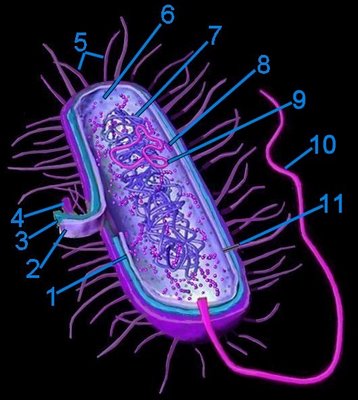
Microfossils dating from more than 3 billion years ago demonstrate that bacteria were the first life-forms on the planet. Bacteria and Archaea, both prokaryotic, ruled until the advent of nucleated cells with membranous organelles, such as those of which we are constructed (eukaryotic cells). The earliest known fossilized evidence of early life forms are found in stromatolites – large reef structures created by communities of Cyanobacteria. Mistakenly called ‘blue-green algae’, the Cyanobacteria are bacteria that evolved relatively late. They are believed to have “invented” oxygenic photosynthesis over 1 billion years ago. As oxygen levels rose, organisms were forced into endosymbiotic unions as – to them – toxic levels of oxygen threatened their continued existence. (Anaerobic bacteria, which are killed by oxygen, persist to this day in environments with very low levels of oxygen.) These serial endosymbiotic transfer events paved the way for evolution of eukaryotic cells, which in turn enabled multicellular assemblages.
Since the advent of modern molecular genetics, biological evolution has come to be understood as a change in genotype – a genetic variation resulting from mutation and alteration in the intergenerational frequency of alleles in populations. That is, an alteration in the frequency of alternative forms of genes between generations. By this definition, the human species is demonstrably still evolving.
The term 'microevolution' refers to small-scale evolutionary events that involve changes in allele frequencies from one generation to the next, and that results in slight changes in affected organisms. The term 'macroevolution' refers to that accumulation of microevolutionary events that is associated with the origin, diversification, extinction, and interactions of organisms. Macroevolution, being cumulative, involves large scale evolutionary change such as the evolution of new species, genera, and families (or even higher taxa). Some creationists favour the ridiculous, fallacious straw man argument that microevolution occurs, but that macroevolution could not have occurred by the same mechanisms, or is impossible.
Biologist Ersnt Mayr suggested that a biological species be defined by its inability to produce fertile offspring when mated with another species. Mules are an example of such a mating – between a horse and a donkey. Mules do rarely produce offspring, but the gene-based, phylogenetic classification of species remains more useful than taxonomies based on physical characteristics. Molecular geneticists are able to compare the genomes, the total complement of nucleic acids, of different species and to estimate the evolutionary distance between species. This is time since the compared species last shared a common ancestor.
Speciation depends upon genetic mutation and alteration of allele frequencies, yet morphologic changes may reflect alterations in the regulation of genetic expression without a major alteration in genotype – body type may appear very different without considerable change in genes.
If this seems unlikely, just consider the considerable differences that selective breeding has wrought in size and configuration within one canine species. Structural mechanics might prevent the union of a Chihuahua with a Great Dane, but such a union could produce fertile offspring.
Similarly, the paramount importance of gene regulation almost certainly explains much of the morphological difference between humans and chimps – two species who share more than 98% of their DNA. Just a comparatively few regulatory genes are responsible for the developmental changes that render us distinct from our closest relative.
Along the same lines of modification of genetic expression, epigenetic mechanisms, such as alternative splicing or alternative promoters, enable a single gene to give rise to multiple versions of a protein. Thus, through epigenetic mechanisms, the biological complexity confered by genes is greatly expanded. Proteins are much, much more variable in structure, and hence in biochemical activity, than are nucleic acids such as DNA and RNA. Formed from amino acids, proteins regulate cellular metabolism (as enzymes), regulate genetic expression (cofactors), and regulate communication between cells (ion channels, pumps, receptors). Structural proteins form the cytoskeleton that supports cells, and specialized transport proteins move materials and organelles within cells and effect muscular contraction.
There are two basic types of mechanism involved in biological evolution. First are the genetic causes of alteration of genes within the genotype of individuals. Most genetypic alterations are not the result of point mutations, which may, or may not result in abnormal proteins through alteration of a single nucleobase in the genetic code. Creationists create fallacious straw man arguments by focussing their arguments on point mutations, conveniently ignoring the other, more important mechanisms of genetic change, such as duplications.
Single nucleotide polymorphisms, as point mutations are correctly termed, as well as alteration of longer segments of DNA may be neutral, beneficial, or deleterious. Clearly, neutral or beneficial alterations, whatever their genetic mechanism, will persist while deleterious alterations will ultimately be eliminated if they render the organism less capable of reproductive success. Gene duplications, while guaranteeing a functional copy of a gene also provide duplicate copies of the gene that may be altered without destroying the organism's viability, thus providing opportunity for the accumulation and transmission of a variety of mutations.
This brings us to the second type of mechanism operating in biological evolution, the statistical population mechanisms that determine the fate of an altered gene. These are the mechanisms that increase or decrease frequency of an allele – an alternate gene at a particular chromosomal position –within a population. Natural selection, the Darwinian explanation for biological evolution, remains one of the mechanisms acknowledged by biologists, yet not the only recognized mechanism. Genetic drift, gene flow, and horizontal gene transfer in prokaryotes have also been demonstrated to have operated in bringing about evolutionary change. Creationists typically focus their fallacious straw man attacks on "Darwinian" evolution, avoiding dealing with the much stronger "Modern Synthesis of Evolution", which combines understanding of population genetics and molecular genetics.
~ Richard Dawkins, The Blind Watchmaker.
"No intervening spirit watches lovingly over the affairs of nature (though Newton's clock-winding god might have set up the machinery at the beginning of time and then let it run). No vital forces propel evolutionary change. And whatever we think of God, his existence is not manifest in the products of nature."
~ Stephen Jay Gould
Living Alongside Ancestors?
 Out of Africa and University College London comes National Geographic fieldwork describe in a NYT article (BBC).
"Scientists who dated and analyzed the specimens — a 1.44 million-year-old Homo habilis and a 1.55 million-year-old Homo erectus — said their findings challenged the conventional view that these species evolved one after the other. Instead, they apparently lived side by side in eastern Africa for almost half a million years."
The NYT article quotes Dr. Leakey as saying that the "co-existence makes it unlikely that Homo erectus (1.55 Mya) evolved from Homo habilis (1.44 Mya)." Certainly, an earlier erectus specimen could not have evolved from a later habilis specimen, but I am not convinced that a species could not co-exist with an ancestral species.
Several challenges face paleontologists studying hominids. The number of specimens is small and their preservation is typically incomplete (imagine trying to reconstruct a person from only a tooth or the top of their skull). Most of the species or apparent species studied are extinct, so we have no DNA evidence to indicate their evolutionary relationships. Further, it is more interesting for the paleontologist (and the media) when the latest discovery appears to diverge from previous analyses.
Other blogs: New Fossils and Our Understanding of Human Evolution, New Hominid Fossils Reported
Darwinism
Charles Darwin accurately predicted that his theories would evoke skepticism from scientists and ridicule from the religious. Happily, scientists came to accept his ideas, and his breakthrough insights have proved highly influential. Unhappily, those biblical literalists who insist that "Genesis" is an accurate description of life's origins, continue to unjustly vilify Darwin's theories.
Summary of Darwin's observations and his Theory of Evolution by Natural Selection:
1. Most animals have such high fertility rates that their population size would increase exponentially if all individuals were to reproduce.
2. Yet, except for seasonal fluctuations, populations remain relatively stable in size.
3. Because environmental resources are limited, individuals compete for resources, limiting survival and reproduction.
4. Individual characteristics vary within populations and those members of a population that are better adapted for survival in the face of competition are more likely to pass their characteristics on to the next generation.
5. Thus, species gradually accumulate inherited adaptations that best suit them for their environment, passing these on to progeny. Speciation involves gradually accumulated differentiation of characteristics.
Darwin was not aware of the existence of DNA, nor of the mechanisms that alter genotype. Darwin focussed on the inheritance of adaptive individual characteristics that had ensured reproductive success, and the resultant slow accumulation of adaptive phenotypic change. Darwin did not say that all species are gradually evolving (cf. quote.)
Subsequent evolutionary theorists first disputed Darwin's concept of gradual evolution. Gould and Eldredge introduced the concept "phyletic gradualism " which they discredited through the concept of punctuated equilibria. The Theory of Punctuated Equilibria was proposed in order to explain patchiness in the fossil record and the the localized adaptive radiation of species observed following extinction events. This stage of thinking about evolutionary mechanisms has been termed "Neo Darwinism".
Modern advances in molecular genetics, coupled with studies of population genetics have led to the "Modern Synthesis" of understanding concerning mechanisms of evolution. Current understanding incorporates knowledge of genetic drift, gene flow, mutation, recombination, and natural selection mechanisms.
Creationists and defenders of "intelligent design" theory commonly attack a "strawman" depiction of Darwinism or Neo-Darwinism as representing current thinking in their attempt to discredit evolutionary science. It is important for any person wishing to defend evolution-as-fact and modern evolutionary theories to attain a thorough understanding of modern evolutionary theory as well as fallacious creationist arguments.
connected
Affiliated science sites • Abiogenesis and Evolution • Algorithms of Evolution • Archea Eubacteria • Cancer • Cell Biology • Complex Systems • Cyanobacteria • Diagrams Tables • Endosymbiosis • Enzymes • Evo Devo • Evolution in Action • Fat • Geology • Glossary • Immunology • Life Chemistry • Medical Science • Mechanisms of Evolution • Molecule • Molecular Biology • Molecular Paths • Neurosciences • Organics • Origin of Life • Paleogeology • Pathways • Photosynthesis • Protein • Receptor • Rocks & Minerals • Science of Evolution • SET • Signaling • Sleep • Stem & Progenitor Cells • Stromatolites • Taxonomy Phylogeny • Tissue • Virus •
Also some philosophy/general interest sites: Avidity : Eine Kleine Nattermusing : eMusings : Galaria : Godspell Follies : Harper's Folly : Mimble Wimble : Sintheist : Tabula Flexuosa :
Evolving Atheist Blogroll
If you are interested in joining Mojoey's huge atheist blogroll, click on the image below and send him an email. His website Deep Thoughts (I wonder if that's a pun) is also worth a look-see.
Gray Matters
Adeistic
Avidity
Eine Kleine Nattermusing
eMusings
eVolition
Galaria
Godspell Follies
MetaThoughts
Mimble Wimble
Naturalism
Neologisms
palimpsest
Sechuam
Sintheist
Tabula Flexuosa
Weltschauung